
“Whatever befalls the earth, befalls the sons of the earth.
– Chief Seattle
You must teach your children that the ground beneath their feet is the ashes of our grandfathers. So that they will respect the land, tell your children that the earth is rich with the lives of our kin. Teach your children what we have taught our children, that
the earth is our mother. Whatever befalls the earth, befalls the sons of the earth. If men spit upon the ground, they spit upon themselves.
This we know. The earth does not belong to man; man belongs to the earth. This we know. All things are connected like the blood which unites one family. All things are connected.
Whatever befalls the earth befalls the sons of the earth. Man did not weave the web of life; he is merely a strand in it. Whatever he does to the web, he does to himself.”
Gaia Theory
October 24, 1946 soldiers and scientists at White Sands Missile Range initiated the launch of a V-2 missile, which carried a 35-millimeter motion picture camera, capturing the initial images of Earth from space. This was a pivotal moment in history for both environmental scientists and theologians for two important reasons. For the first time, after thousands of years of speculation, we were able to see that the earth is one integrated and complete entity. Shortly after, in the 1960’s, the first astronauts went to space and humans had the opportunity to see the earth from a perspective that we had never seen before. All of the astronauts had attested that this experience was deeply spiritual and seeing the earth as whole, perhaps led them to understand that, as Chief Seattle States, “Man did not weave the web of life; he is merely a strand in it.”
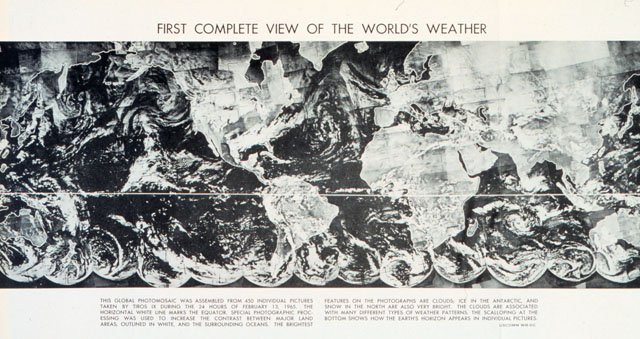
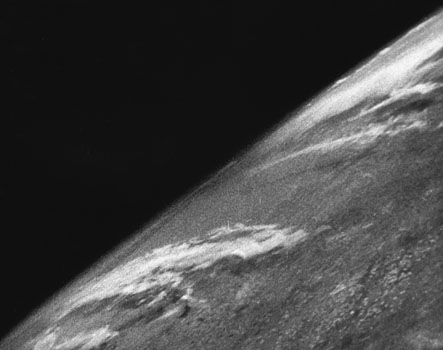

Native American spirituality, Hindu/ Buddhist traditions, Christian Mystics, and those who walk from all different faiths have long speculated that we are one system and intrinsically connected to each other. The images displaying the earth as one integrated system were not surprising because it was new information, it was deeply confirming because somehow our deepest soul inclinations have told us, without this scientific evidence, that this was true. Faith is to believe in things unseen. We knew this truth not based on research or analysis but based on our inmost and uniquely human intuitions, love, connection and purpose. This discovery sparked further research as scientists wanted to further understand why earth has a plethora of life and other planets do not. After all, there are over 33,000 known species of fish. There is so much diversity in just one species not to mention the abundance of other creatures and plants on this planet, yet to this day in our research we haven’t been able to find any elsewhere. So what makes Earth, Earth?
It seems the answer is in the atmosphere. Scientists that went to other planets like Venus and Mars that had similar attributes, particularly Mars, found that there was a distinct difference in the atmosphere that made earth habitable. Scientists concluded that the reason why there wasn’t life on Mars is because the atmosphere was stagnant and had reached an equilibrium where no new chemical reactions could occur. If you observe even your own relationship with other life on earth you will understand that this makes total sense. I cannot breathe, let alone survive, without the trees and the many resources that come from other plants, animals, and environments. Each creature or planet releases different gasses and components into the atmosphere balancing the chemical reactions making them ongoing and hospitable for a wide array of living organisms. It’s impossible for me to separate myself from everything else or I would perish. Famous atmospheric scientist James Lovelock states that the earth’s system is “an open system, far from equilibrium, characterized by a constant flow of energy and matter”. Essentially life on earth has not only created the atmosphere but also regulates and sustains it. Lovelock concluded that this is the very hallmark of life.
This finding seems to meet the criteria of what scientist Maturana called a living system. Maturana defines a living system as one in which “the product of its operation is its own organization”. Furthermore, Lovelock builds his own theory as well as Maturana’s research by distinguishing that self-regulation is the most important part of this theory. As an astrophysicist, Lovelock was aware that since the beginning of life on earth up to the 1960’s the temperature of the sun had significantly increased by 25% , however despite this the temperature of the Earth has stayed stable. This data alone is incredible considering that the earth remained hospitable during that 4 billion year time period (Capra, 102).
After compounding upon the work of other scientists and NASA, Lovelock could then clearly define Gaia theory, a completely new way to see our earth. Lovelock stated:
“Consider Gaia theory as an alternative to the conventional wisdom that sees the earth as a dead planet made of inanimate rocks, ocean, and atmosphere, and merely inhabited by life. Consider it as a real system, comprising all of life and all of its environment tightly coupled so as to form a self-regulating entity.”
I believe that trying to understand climate change through this lens could inspire climate action in a way that we haven’t seen before. Societies that have historically treated the environment usually have strong spiritual foundational beliefs of oneness. This new way of seeing could influence how one interacts with every other kind of life on earth knowing that what one does to others one does to themself.
Separateness and Systems
Currently, 64 years after Lovelock’s work, so much and so little has changed. Despite the overwhelming evidence for climate change and the visible need for sustainability work, scientists have been surprised at the lack of urgent individual action shown towards environmental issues. This is in part due to our egoic nature. For much of history we have viewed the evolution and development of the human species as separate and more important than that of the natural world. We have often used religion to validate this narrative. We see this predominantly in mainstream conservative christianity, which has largely used biblical scriptures and phrases like “god is sovereign” to imply that we are not in crisis. Additionally, highly influential Christian Political figures like Candace Owens, Charlie Kirk, and Vivek Ramaswamy have all seconded Donald Trump’s previous statements that climate change is a “hoax”. All of these factors in combination with the American emphasis on individualism is in part why only 12% of the republican party believes that climate change is an issue that needs to be addressed. On the more liberal side you do see more people agreeing that climate change is an important issue, but they are still failing to partake in consistent sustainable action. Climate scientists have made it clear that we don’t have time for everyone to procrastinate acting sustainably, some even claiming that we have moved into “uncharted territory”. In the most recent 2023 IPCC climate change report it states:
1. Human activities, principally through emissions of greenhouse gasses, have unequivocally caused global warming, with global surface temperature reaching 1.1°C above 1850-1900 in 2011-2020. Global greenhouse gas emissions have continued to increase, with unequal historical and ongoing contributions arising from unsustainable energy use, land use and land-use change, lifestyles and patterns of consumption and production across regions, between and within countries, and among individuals (high confidence). IPCC 2023.
2. Widespread and rapid changes in the atmosphere, ocean, cryosphere and biosphere have occurred. Human-caused climate change is already affecting many weather and climate extremes in every region across the globe. This has led to widespread adverse impacts and related losses and damages to nature and people (high confidence). Vulnerable communities who have historically contributed the least to current climate change are disproportionatelyaffected (high confidence). IPCC 2023.
So if awareness isn’t enough, and we are already seeing severe effects of climate change, then how do we get everyone to change longstanding habits ,now? The fact that people who do see climate change as an issue are not taking more sustainable action suggests that we need a redirection in how we approach these issues. This suggests a needed renewal in how we deliver sustainability narratives, refocusing our concern on execution and beliefs instead of just interest and awareness. When we hear about a range of isolated issues it can be overwhelming and even unproductive. If someone is to watch the news and they hear about fires in California, Orcas dying in the PNW, and then how 1 and 10 New Yorkers are food insecure they will likely get overwhelmed and anxious and fail to invest in any of these causes because of the size, scale and amount of issues. Many people fail to act sustainably because of the very real psychological limitations like our tendency to prioritize immediate gratification, our limited capacity to address stressors, and our desire to conform to social norms. However through understanding our psychology and human inclinations we can learn to work with our tendencies and not against them.
It seems that the real problem is that when we see these separate issues in isolation we have trouble grasping why it is important to us and how we can address the root of the issues. Especially in America since most Americans find their sense of self in their race, gender, class identity and other group identities and have little identification with people who fall outside of their social groups. This can be seen when white people may not actively work to combat anti-blackness because they believe that it’s not their problem or that it has no effect on them. This issue of perception that perpetuates our disconnection with other Americans is largely why we are so divided especially regarding our understanding of climate change. In the west we have no foundational belief of oneness, which more than any one issue, seems to be our biggest problem. However, the deeper we delve into the critical issues of our era, the more apparent it becomes that they are not isolated incidents. Rather, they form a complex web of interrelated and interdependent problems. In the way that any time you try to attempt combatting and understanding one issue you will find that to fix the problem you will have to work to fix many other issues that are intertwined. For example, if you want to reduce carbon emissions you will have to educate more women, and if you want to educate more women you will have to tackle dozens of other barriers and problems to accomplish that. You can’t solve any one isolated problem with an isolated solution. Our desire to solve individual problems with isolated solutions is a large part of the reason we haven’t been able to tackle some of the biggest contributors to climate change, a great example being food insecurity.
When I was working with the The Farmlink Project researching gaps in the food system, I was shocked to find how rapidly food insecurity is increasing in all parts of America. I was even more shocked to find that the amount of money that we’ve been spending on food assistance has been steeply increasing as well. One would think that with the plethora of monetary and food donations made to help fight food insecurity would amount to a large decrease in food insecurity. One example being in 2021 the percent of food insecure households was 10.2%. In 2021 the US spent a record breaking amount on snap programming, amounting to 113.74 billion dollars allocated to fight food insecurity. This was a significant increase spending around 79.1 billion the previous year. Unfortunately, we then saw the rates of food insecure households jump from 10.2% to 12.8% in 2022. Even accounting for the coronavirus, it seems there was little to no positive correlation between money spent and a reduction in food insecure households.
Whilst researching both a food bank and a food coalition I realized that once again we have largely tackled food insecurity with surface level solutions. There is a lack of food and a lack of money possessed by those who need to purchase food, hence our solution: food donation and fundraising. However, there is little talk of systemic change or changing how we implement funds so we can get the best results for the billions we are spending. Andy Fisher, author of Big Hunger, eloquently articulated what I was beginning to realize as my research continued, stating “first, an anti hunger sector that is focused on raising funds from corporations and the American public to sustain and grow itself assumes that poverty is a necessary, ever present, and even growing evil”. The key word here is necessary!
“I used to think the top environmental problems were biodiversity loss, ecosystem collapse and climate change…I thought that with 30 years of good science we could address those problems. I was wrong. The top environmental problems are selfishness, greed and apathy…and to deal with those we need a spiritual and cultural transformation. And we scientists don’t know how to do that.”
– GUS SPETH, environmental lawyer and scientist
Whilst researching Harvest Against Hunger, a food coalition, I learned that the influx of monetary donations cannot merely be a solution to food insecurity, we need to build local relationships that will create a foundation for a strong local economy. This means connecting organizations, farms, people, and food banks to each other, so we can move away from our dependance on industrial agriculture. Change can not happen without connection and connection cannot happen without Individual action. Harvest Against Hungers Farm to Food Pantry program does exactly this. By allowing food banks and food programs to purchase from local farms using TEFAP and EFAP money, visible change is made over time. Thus, by creating systemic change and acknowledging that no organization, farm, or person can thrive without community engagement this program has reaped many long term benefits. Some of the most notable outcomes of the program being economic benefits for farms, more diverse culturally accurate food for food banks, environmental benefits from reduced support of industrial agriculture, psychological benefits of increased community connection, and many more positive side effects. Essentially this model is so impactful not because of the amount of money allocated to HAH but because it addresses the root of the problem, disconnection and isolation. As Seattle develops a local food economy, one that includes food support systems, a domino effect of positive consequences will occur. Given that our current climate issues result from an interrelated vast group of problems, when we begin to mend one problem we begin to mend and fill other gaps.
This approach to a climate related issue is grounded in community, relationships and connection validating gaia theory. Hence if we are to approach any of the pressing climate issues of our time we need to recognize that one problem affects all problems, one person affects all other people and that we are just a strand in the web of life. It’s commonly known in all faith traditions that the ego, or the separate self, is the root of our suffering. If we want to get people to act more sustainably then it would be helpful for them to understand that our conceptions of separateness don’t just hurt the Earth, they hurt us. I think instead of merely raising awareness about individual issues we need a spiritual movement that serves as the motivation and ground for all environmental conservation work that we do. If the foundation of our sustainability work is grounded in a deeper more spiritual less factual purpose that Chief Seattle made so clear “All things are connected like the blood which unites one family. All things are connected.” then we might be able to heal our Gaia and ourselves.
Sources
Capra, Fritjof. The Web of Life. Anchor Books, 1996.
Climate Change 2023, http://www.ipcc.ch/report/ar6/syr/downloads/report/IPCC_AR6_SYR_SPM.pdf. Accessed 29 Apr. 2024.
Cull, Jane. Living Systems: An Introductory Guide to the Theories of Humberto Maturana & Francisco Varela. Éditeur Inconnu, 2013.
Deamer, D. W. “Origins of life and early evolution of the biosphere: A home page on the World Wide Web.” Origins of Life and Evolution of the Biosphere, vol. 26, no. 3–5, Oct. 1996, pp. 317–317, https://doi.org/10.1007/bf02459782.
“Emergency Food in NYC.” Data Team, council.nyc.gov/data/emergency-food-in-nyc/. Accessed 23 Apr. 2024.
“Explorer 1.” NASA, NASA, explorer1.jpl.nasa.gov/galleries/earth-from-space/. Accessed 25 Apr. 2024.
“Gaia before gaia.” James Lovelock, 13 July 2021, pp. 48–68, https://doi.org/10.2307/j.ctv1mjqv74.9.
“How to Use Psychology for Sustainability and Climate Justice.” American Psychological Association, American Psychological Association, http://www.apa.org/ed/precollege/psn/2022/03/psychology-sustainability-climate-justice. Accessed 23 Apr. 2024.
“In Viral Turning Point USA Video, Candace Owens and Charlie Kirk Falsely Claim There Is No Evidence of Global Warming and Scientists Don’t Know the Cause.” Climate Feedback, Climate Feedback, 30 Nov. 2021, climatefeedback.org/claimreview/in-viral-turning-point-usa-video-candace-owens-and-charlie-kirk-falsely-claim-there-is-no-evidence-of-global-warming-and-scientists-dont-know-the-cause/.
Junior, Vic Lang’at. “How Many Species of Fish Are There?” WorldAtlas, WorldAtlas, 10 Jan. 2019, http://www.worldatlas.com/articles/how-many-species-of-fish-are-there.html.
Kennedy, Brian. “How Republicans View Climate Change and Energy Issues.” Pew Research Center, Pew Research Center, 1 Mar. 2024, http://www.pewresearch.org/short-reads/2024/03/01/how-republicans-view-climate-change-and-energy-issues/.
Schneider, Keith. “James Lovelock, Whose Gaia Theory Saw the Earth as Alive, Dies at 103.” The New York Times, The New York Times, 27 July 2022, http://www.nytimes.com/2022/07/27/climate/james-lovelock-dead.html.
Seattle, and David M. Buerge. Chief Seattle. Sasquatch Books, 1992.
 Ariel Cook
Leave a comment