In the third and fourth centuries CE, as Christianity transitioned from a persecuted sect to an imperial religion under Constantine, a profound spiritual migration unfolded. Men and women retreated from urban centers into the deserts of Egypt, Syria, and Palestine to seek an authentic encounter with God. These ascetics—known as the Desert Fathers and Mothers—became foundational figures in Christian monasticism and contemplative theology. Their radical commitment to silence, solitude, and kenosis (self-emptying) was a protest against the growing materialism and institutionalization of faith. More than a historical phenomenon, their wisdom continues to address the perennial human struggle with ego and suffering. This essay examines how silence and solitude functioned as transformative disciplines in the desert tradition and how these ancient insights can be integrated into modern life marked by distraction and ego-centered striving.
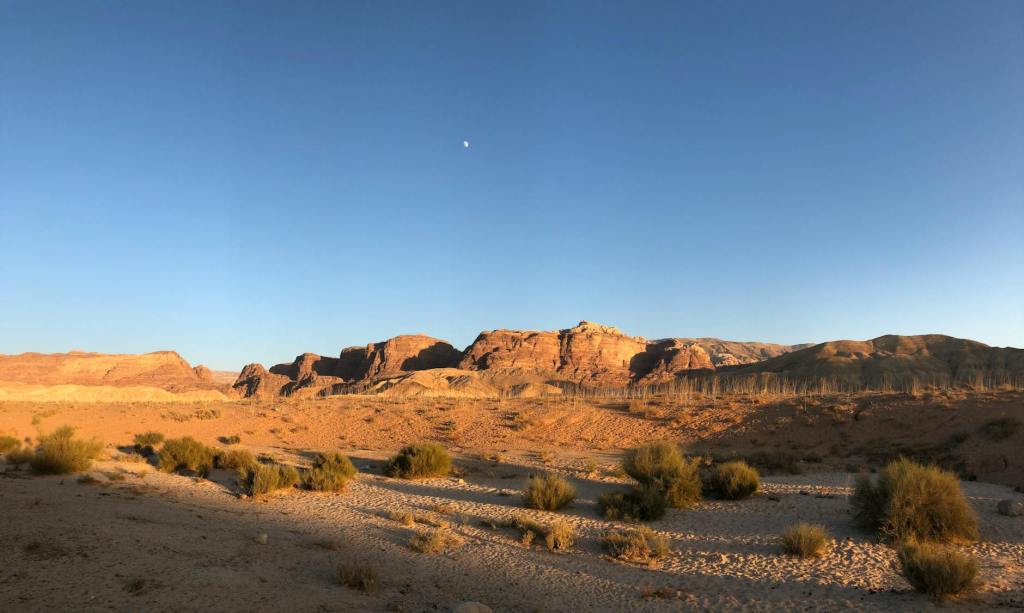
The desert was chosen not only for its physical isolation but for its symbolic capacity to expose inner reality. In The Life of Anthony, Athanasius (1994) describes Anthony’s retreat into the wilderness as a decisive act of purification—an intentional confrontation with the self in the presence of God. Anthony’s withdrawal represented not escapism but a pursuit of authenticity, what the desert elders called “purity of heart.” In this spiritual geography, silence was both a method and a goal. Abba Arsenius, a former Roman tutor who renounced his wealth, prayed, “Lord, lead me to salvation, and in silence teach me the way” (The Sayings of the Desert Fathers, trans. Ward, 1984). Silence, for the Desert Fathers and Mothers, was not the mere absence of words but the stilling of inner noise. Evagrius Ponticus (2003) wrote extensively about the logismoi, or disordered thoughts, which cloud the soul and generate suffering. In solitude, one could observe these mental patterns and allow them to dissolve through prayer and awareness. Speech, in contrast, often perpetuated the ego’s desire to justify and control. As Abba Poemen observed, “A man may seem to be silent, but if he condemns others, he is babbling ceaselessly” (Ward, 1984, p. 171). Thus, silence became a means of dismantling self-deception.
This insight aligns with modern contemplative psychology. The incessant inner commentary of the ego—its judgments, fears, and comparisons—corresponds to what the Desert Fathers diagnosed as the restless mind. As Thomas Merton (1961) noted, “The Desert Fathers were seeking not escape, but purity of heart, the clear vision of reality” (p. 24). Contemporary mindfulness practices similarly emphasize the importance of stillness in interrupting the habitual patterns that sustain suffering. The desert tradition thus anticipated the psychological understanding that awareness, cultivated through silence, reduces identification with egoic thought and opens the soul to transformation.
The theological foundation of desert spirituality lies in kenosis, the voluntary self-emptying modeled by Christ in Philippians 2:7. For the desert ascetics, imitation of Christ required the surrender of self-will and egoic attachment. This surrender was not a negation of personality but a liberation from its distortions. Evagrius (2003) described the goal as apatheia—a state of serene detachment enabling the soul to perceive reality without passion or prejudice. In this purified awareness, divine love could flow unimpeded. The process of self-emptying was deeply psychological as well as theological. Through solitude, the practitioners confronted the false self constructed by social identity, ambition, and fear. Henri Nouwen (1981) later interpreted this practice as the movement from “loneliness to solitude,” in which one transforms isolation into communion with God. The death of the false self, though painful, revealed the divine image within—the true self that lives not from separation but from union. In contemporary language, the Desert Fathers and Mothers recognized that the ego is the root of suffering. Its incessant need for validation, control, and comparison leads to alienation. Through silence and solitude, they discovered an alternative consciousness grounded in humility and presence. Richard Rohr (2011) articulates this transformation as the shift from the “small self” to the “True Self,” echoing the desert wisdom that freedom comes not through acquisition but through surrender.
The conditions of modern life—constant connectivity, consumerism, and digital overstimulation—pose new challenges to interiority. Yet the desert wisdom remains profoundly applicable. While few can withdraw to physical deserts, one can cultivate an “inner desert” through intentional practices that mirror the ascetics’ disciplines. First, the practice of silence can be reclaimed through contemplative prayer or meditation. Setting aside even brief daily periods free of speech, technology, and external input allows the mind to rest and the heart to listen. Such “desert moments” interrupt the ego’s narrative and reorient awareness toward presence. Second, solitude must be reframed as a necessary condition for spiritual and psychological health. As Nouwen (1981) observed, solitude is not withdrawal from others but a return to the self in God. Moments of solitude—walking without headphones, journaling, or sitting in nature—offer the same purifying encounter the desert provided: a confrontation with one’s own thoughts and motives. Third, the ethic of simplicity reflects the desert ideal of detachment. The Fathers and Mothers renounced material excess not from disdain for the world but to cultivate freedom from dependence on it. Modern equivalents might include minimalism, digital fasting, or acts of voluntary simplicity that prioritize being over having. Finally, community grounded in silence can embody this wisdom in contemporary life. The monastic balance between solitude and communal prayer demonstrates that silence and relationship need not be opposed. Participation in contemplative groups, retreats, or shared silent meditation can offer modern seekers a way to practice the desert ethos collectively.
The Desert Fathers and Mothers stand as luminous witnesses to the transformative power of silence and solitude. Their wisdom transcends historical context, offering a path toward freedom from the egoic illusions that perpetuate suffering. Through self-emptying, they discovered that to lose oneself is to find God—a truth that remains as urgent in the twenty-first century as in the fourth. In an age defined by noise, distraction, and self-promotion, their invitation endures: to enter the inner desert, where silence heals, solitude reveals, and love renews. As Abba Moses counseled, “Sit in your cell, and your cell will teach you everything” (Ward, 1984, p. 138). In the stillness of that “cell,” whether literal or metaphorical, the modern soul can rediscover what the desert already knew—that emptiness is not loss, but the very space where God dwells.
References
Athanasius. (1994). The life of Antony and the letter to Marcellinus (R. C. Gregg, Trans.). Paulist Press.
Evagrius Ponticus. (2003). The Praktikos & Chapters on Prayer (J. E. Bamberger, Trans.). Cistercian Publications.
Merton, T. (1961). The wisdom of the desert. New Directions.
Nouwen, H. J. M. (1981). The way of the heart: Desert spirituality and contemporary ministry. Harper & Row.
Rohr, R. (2011). Falling upward: A spirituality for the two halves of life. Jossey-Bass.
Ward, B. (Ed. & Trans.). (1984). The sayings of the Desert Fathers: The alphabetical collection. Cistercian Publications.
 Ariel Cook
Leave a comment